
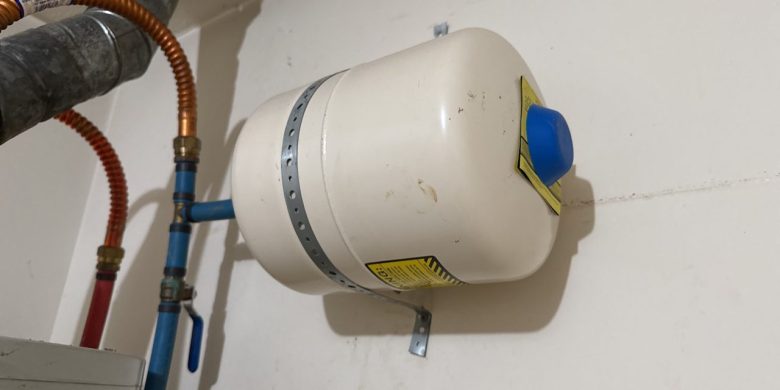
A few days ago, I inspected a 48-year-old home here in Central Mississippi. It was equipped with a fairly new tank-style water heater installed in a garage storage room. Above the heater, I noticed a small expansion tank connected to the plumbing. During our inspection review, my client asked one of the most basic questions a homeowner could ask.
“What’s that tank above the water heater, and what’s it for?”
Naturally, my response was, “Let me tell you.”
When we heat water, it expands. Remember the pressure cooker in your grandmother’s kitchen and those familiar hissing sounds? As the water heated, some of it turned to steam, and the pressure cooker released that steam to control the pressure in the pot.
Your water heater operates differently, but the same general idea of heating and pressure is involved. Even when water remains liquid, heating it causes it to expand (take up more space). And when that water is confined inside a plumbing system, the additional volume can increase the pressure.
In some homes, expanding water can push its way backward through the cold-water supply pipe toward the public water main. In other homes, a special valve prevents that backward movement. When the expanding water has nowhere to go, pressure begins to build throughout the home’s plumbing system.
That’s where the little tank above your water heater comes into play.
Inside the tank is a flexible rubber diaphragm that separates the water from a pocket of compressed air. As the water heats up and expands, some of it pushes into the tank, compressing the air on the other side of the diaphragm.
Think of it as giving the expanding water a little breathing room.
When someone opens a faucet and the plumbing pressure drops, the compressed air pushes that extra water back into the system. It’s a pretty simple arrangement, but it can help protect your water heater and plumbing from unnecessary pressure buildup.
A Little Tank With a Big Job
You might be surprised how much water expands when heated. A 50-gallon water heater filled with cold water can produce roughly half a gallon or more of additional water volume as it reaches normal operating temperature, depending on the starting and ending temperatures.
That may not sound like much. But imagine trying to squeeze another half-gallon of water into a plumbing system that’s already full, with every faucet closed.
Water doesn’t compress appreciably under ordinary household conditions. Something has to accommodate that extra volume, or the pressure can rise considerably.
The expansion tank provides that space without requiring an electric motor, a switch, or any complicated machinery. It simply responds to changes in water pressure as the heater operates.
Of course, the tank must be properly sized and adjusted to perform its job. We’ll come back to that in a moment.
Does Every Water Heater Need an Expansion Tank?
No, and this is where things get interesting.
You might see an expansion tank above the water heater in one home and find no tank at all in another. That doesn’t automatically mean something is wrong with either installation.
Years ago, many residential plumbing systems allowed expanding water to move backward through the cold-water supply pipe toward the public water main. Plumbers call this an open system. As the water heated and expanded, the additional volume had somewhere to go.
But many plumbing systems today contain devices that prevent water from flowing backward toward the public supply.
A check valve allows water to move in one direction but not the other. A backflow preventer helps protect the public water supply from water that might otherwise flow backward from a building. And some pressure-reducing valves, which regulate incoming water pressure, also prevent reverse flow.
These devices serve important purposes, but they can create what plumbers call a closed system. Water can enter the home’s plumbing, but it cannot readily move backward toward the street.
When that happens, the plumbing system needs another way to accommodate the water expanding inside the heater.
An expansion tank is a common solution, although other approved methods of thermal expansion control are available. The appropriate arrangement depends on the home’s plumbing system, applicable requirements, and the water heater manufacturer’s instructions.
Here’s another point worth remembering: finding an expansion tank doesn’t necessarily prove the home needed one when it was installed. And not finding one doesn’t automatically establish a defect.
What matters is how the plumbing system actually works.
What If the Expansion Tank Is Installed in the Attic?
Here in Central Mississippi, it’s common to find water heaters installed in attics. That makes another detail worth considering.
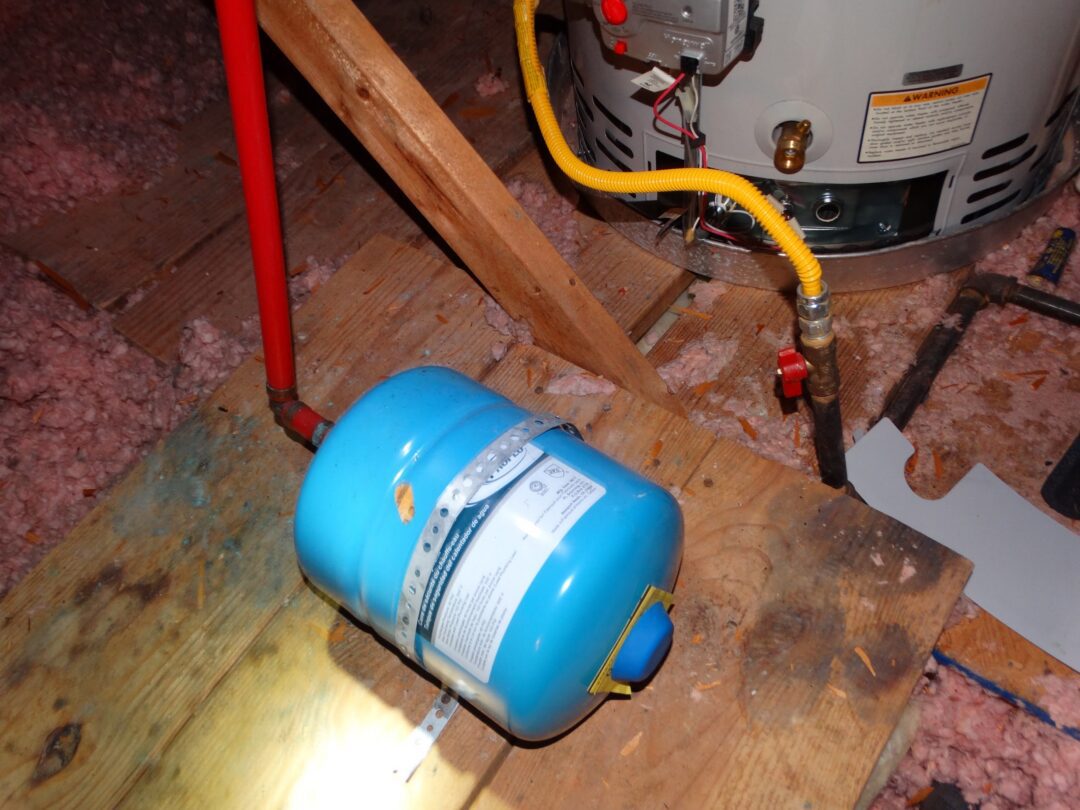
Like any component connected to a pressurized water supply, an expansion tank or its connecting fittings can eventually develop a leak. And when that equipment is sitting above a finished ceiling, even a relatively small leak can cause considerable damage before anyone notices it.
That’s why many expansion tank manufacturers address potential water damage in their installation instructions. Depending on the equipment and location, a properly drained pan or another suitable means of containing and directing leakage may be necessary.
If your water heater and expansion tank are installed in the attic, take a look at how they’re arranged. Is the expansion tank positioned where leakage could be collected and safely drained, or could escaping water reach the ceiling below?
It’s a small installation detail that deserves attention, particularly when the equipment is located above finished living spaces.
What About Homes With Private Wells?
Here in Central Mississippi, we also have plenty of homes supplied by private water wells.
These systems often have a larger pressure tank that stores water under pressure and helps control the well pump. Depending on the plumbing arrangement, that pressure tank may also provide room for water expanding inside the water heater.
But having a private well doesn’t automatically eliminate the need for thermal expansion control. Check valves, the location of the pressure tank, and other components can change how the system behaves.
The important question remains the same: Does the expanding water have somewhere to go?
Water Pressure Tells Part of the Story
Most homeowners don’t give much thought to their water pressure until something goes wrong.
The pressure coming into a home isn’t necessarily the same throughout the day. It can change as demand on the public water system changes. Some homes have pressure-reducing valves to control incoming pressure, while others receive water directly from the municipal supply.
An expansion tank doesn’t take the place of a pressure-reducing valve. The two devices perform different jobs.
A pressure-reducing valve regulates incoming water pressure. An expansion tank accommodates the additional water volume created when water is heated.
And there’s another little detail that matters.
Remember that pocket of compressed air inside the expansion tank? The pressure of that air before the tank is placed into service is called the precharge.
The installer generally adjusts the precharge to match the home’s cold-water supply pressure, following the manufacturer’s instructions. If the pressure isn’t properly matched, the tank may not have enough usable space for the expanding water.
Tank size matters, too. The water heater’s capacity, supply pressure, and water temperature all influence how much expansion the tank must accommodate.
Here’s something else worth knowing. A water-pressure measurement taken during a home inspection tells us what the pressure was at that particular moment. It doesn’t necessarily tell us how high the pressure might climb overnight or while the water heater is reheating its contents.
A plumber can use pressure measurements, sometimes recorded over time, to help determine whether a system is experiencing excessive incoming pressure, thermal expansion, or both.
That’s also why an expansion tank can look perfectly normal from the outside and still not be performing as intended.
What Happens When an Expansion Tank Fails?
Remember that rubber diaphragm inside the tank? Like many components in a home’s plumbing system, it doesn’t last forever. Over time, the tank may lose its air charge, or the diaphragm may deteriorate and fail. When that happens, the tank can become waterlogged, leaving little or no usable air cushion to accommodate expanding water.
The homeowner might never notice the failure directly.
Instead, there may be water dripping from the water heater’s relief-valve discharge pipe, unusually high water pressure may develop during heating cycles, or other signs that something isn’t working as it should, such as leaking faucet handles, dripping connections at appliance supply lines, or intermittent leakage at plumbing fixtures.
But those symptoms don’t automatically mean the expansion tank has failed. Excessive incoming water pressure, a problem with the relief valve itself, and other plumbing conditions can produce similar symptoms.
Sometimes a failed tank can also become surprisingly heavy. If it fills with water, the additional weight may place considerable strain on the connecting pipes and fittings, particularly where the tank isn’t adequately supported.
That’s one reason installation and support matter. Some manufacturers permit more than one mounting orientation, but the piping and support must be suitable for the particular tank.
Although you may hear someone suggest tapping an expansion tank to see whether it sounds hollow, that isn’t a reliable way to determine whether the tank is working properly. Its air charge and operation should be checked by a licensed plumber experienced in installing and servicing thermal expansion tanks.
That Other Valve on Your Water Heater
There’s another important device attached to a tank-style water heater. It’s called the temperature and pressure relief valve, commonly shortened to the T&P valve.
This is a safety device, and its job is different from that of the expansion tank.
The expansion tank handles the normal increase in water volume during heating. The T&P valve is designed to release water if the temperature or pressure inside the water heater reaches an unsafe level.
Many residential water heaters have relief valves rated to open at approximately 150 pounds per square inch of pressure or at a water temperature of about 210°F.
Those aren’t normal operating conditions. They’re emergency relief settings.
If an expansion tank isn’t working properly, thermal expansion can sometimes cause enough pressure buildup to make the relief valve discharge. But repeated discharge can have other causes, too.
One thing is certain: the discharge pipe should never be capped or plugged to stop a drip. That valve provides an important safety function, and interfering with it can create a dangerous condition.
If the valve is repeatedly discharging water, the cause needs to be investigated.
What Should a Homeowner Look For?
The next time you’re standing beside your water heater, take a look at the plumbing above it.
You may see a small steel tank connected to the cold-water supply pipe. It might be mounted vertically or horizontally, depending on the equipment and installation.
Look for visible leakage, corrosion, or damage. Take notice if the tank appears loose, sagging, or poorly supported.
And if you see water dripping from the water heater’s relief-valve discharge pipe, don’t assume it’s normal.
But don’t assume an expansion tank is working properly just because it looks good, either.
Its operation depends on conditions inside the tank, including the air pressure and the condition of the diaphragm. Those aren’t things you can determine from a casual visual inspection.
If you notice leakage, repeated relief-valve discharge, or unusual water-pressure changes, a qualified plumber can evaluate the system and determine whether the expansion tank or another component needs attention.
What Did Your Home Inspector Observe?
If you’ve recently purchased a home inspection, you may want to look back at your report and see what the inspector documented about the water heater’s expansion tank.
Here are a few details worth looking for:
- Was an expansion tank identified or photographed?
- Did the inspector describe how the tank was mounted or supported?
- Were any visible leaks, corrosion, or signs of previous leakage reported?
- Were the manufacturer’s name and identifying labels documented, if visible?
- Did the inspector note any concerns with the connecting pipes or fittings?
- Was the home’s water pressure measured and recorded?
Not every inspection report will contain all these details. Inspection standards, accessibility, and the scope of the inspection can vary. And remember, a visual inspection doesn’t establish whether the tank’s internal diaphragm or air charge is working properly. Keep this in mind as well, the purpose of reviewing your report isn’t necessarily to find something your inspector missed. It’s to better understand what was examined, what was documented, and what may still need attention.
One Last Thought
That little tank above your water heater doesn’t attract much attention. Most homeowners don’t even know what it’s called. But once you understand that water expands when it’s heated, and that some plumbing systems won’t allow that expanding water to move backward toward the main water supply, the purpose of the tank becomes pretty clear.
The important question isn’t simply whether your water heater has an expansion tank. It’s whether your home’s plumbing system needs thermal expansion control and whether the equipment installed can do the job.
Sometimes the smallest components in a home have surprisingly important responsibilities.
And sometimes all it takes to understand one of them is a homeowner pointing toward the ceiling and asking, “What’s that little tank for?”