
Definition
Hydrostatic pressure is the pressure that water exerts because of its weight when it is standing still. The deeper the water, the greater the pressure.
Explanation
Imagine water filling a swimming pool. Water near the bottom is under more pressure than water near the surface because of the weight of the water above it.
Around a home, groundwater can create hydrostatic pressure against basement walls and beneath floors. If water collects in the soil, that pressure can contribute to seepage through cracks, joints, or other openings.
Water stored at an elevated level, such as in a municipal water tower, also develops pressure because of its height. That pressure helps supply water to homes, although the water flowing through distribution pipes is no longer stationary.
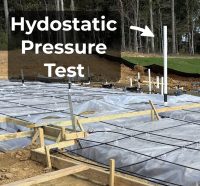
When testing the drain pipe before the concrete is poured, we perform a hydrostatic drain test uses a standing column of water to apply pressure to the piping. The height of that water column determines the test pressure.by sealing the pipe and filling a tall section with water. If no leaks are found over a period of time, the municipal inspector approves the drain line inspection.
Why It Matters
Hydrostatic pressure helps explain why drainage and waterproofing are important around below-grade walls and foundations. It is also a useful term when discussing water storage tanks and water supply pressure.
Example Usage
Water accumulation along the basement wall may create hydrostatic pressure and contribute to moisture entering through openings in the wall.