
Table of contents
Estimated reading time: 7 minutes
Polybutylene water piping deserves attention when it is found in a home, even when no leaks are visible. Some installations have experienced premature pipe or fitting failures, and the material can affect insurance eligibility. However, identifying polybutylene does not mean every pipe is damaged or that failure is imminent.
For a buyer, the practical questions are straightforward: Where is the material installed? What can the inspection establish? What will replacement involve? Will the proposed insurer accept the home with the piping in place?
What is polybutylene piping?
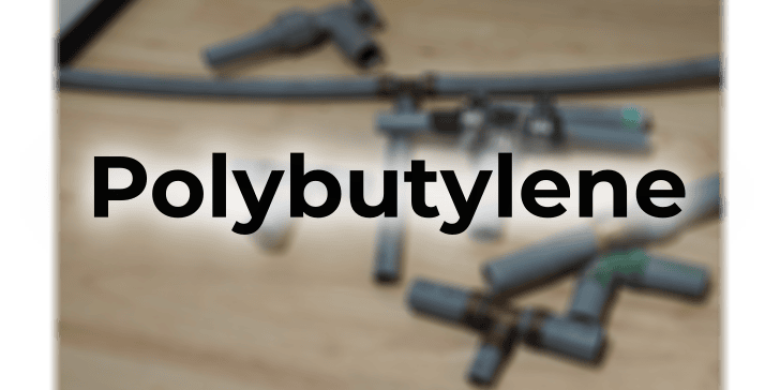
Polybutylene, often shortened to PB, is a flexible plastic used for residential water supply piping in North America from the late 1970s through the mid-1990s. It was installed inside homes and in underground water service lines. It is different from the PEX piping commonly used today. [1]
How can you identify it?
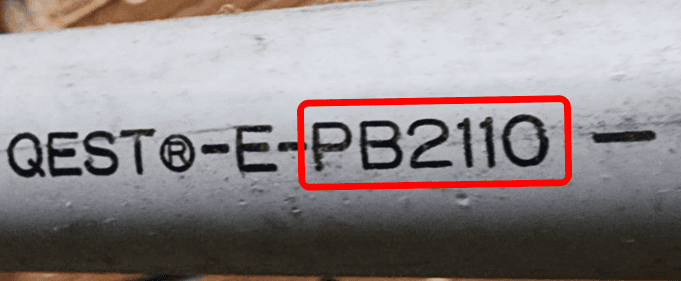
Interior PB piping is commonly gray. Underground service piping may be blue, gray, or black. Markings such as PB2110 or ASTM D3309 are useful identifiers. Older installations may have plastic insert fittings; others have metal fittings secured with crimp rings. [2, 3]
Color and flexibility alone are not enough for reliable identification. Other plastic water pipes can look similar. PVC can also be used for pressure water service, so a blue or gray pipe entering the house should not automatically be assumed to be polybutylene.
The presence of copper or PEX near a water heater or fixture does not establish that the rest of the house has been repiped. Visible piping may represent only a small portion of the installation.
Why has polybutylene been associated with failures?
The failure history involves both fittings and tubing. Many early failures involved acetal plastic fittings. PB tubing failures have also been associated with inadequate resistance to hot chlorinated water. Temperature, mechanical stress, and operating conditions can influence performance. [1, 4]
Deterioration and cracking can begin at the inside surface, where they may not be visible during a home inspection. A pipe that looks satisfactory on the outside is therefore not proof of sound internal condition. At the same time, the material’s presence does not prove that internal cracking has occurred in every pipe. [4]
A localized repair addresses that particular leak or connection. It does not remove the risk associated with PB elsewhere in the system. Previous repairs are worth documenting, but a repair alone does not establish the original failure mechanism or the condition of the remaining piping.
What can a home inspection tell you?
A home inspection can identify accessible piping materials, visible leaks, staining, and apparent repairs. It cannot establish the internal condition or remaining service life of concealed PB piping. No active leakage observed during an inspection means no active leakage was observed in the portions inspected; it is not a guarantee against later failure.
Identification should be supported by readable markings or other reliable evidence when available. The report should also distinguish the piping actually observed from portions that were concealed or inaccessible.
Are repair fittings necessarily a problem?
No. Manufacturers make transition fittings specifically intended to connect PB to other piping materials. A push-fit repair is not automatically improper. Its suitability depends on the exact fitting, the pipe materials, and compliance with the manufacturer’s installation instructions. [5]
PB and PEX insert fittings and crimp rings are not generally interchangeable. Do not accept a connection simply because the parts appear to fit. [1]
Does the code require an existing system to be removed?
ASTM withdrew the historical PB system standard, D3309, in 2010. The Plastics Pipe Institute reports that North American plumbing and mechanical codes have removed PB. Those facts do not, by themselves, require removing an existing installation. Local adoption requirements for a particular repair or replacement depend on the locally adopted code and the authority having jurisdiction or local building code official. [1, 2]
Will a home with PB piping qualify for insurance?
The answer depends on the insurer and the proposed policy. Some insurers treat PB as an unacceptable condition. For example, Citizens Property Insurance Corporation in Florida identifies PB piping as an eligibility concern. That is a carrier-specific example, not a statement of Mississippi insurance requirements. [6]
Before committing to a purchase, tell the insurance agent or broker that PB piping was identified and provide the inspection information. Ask for written confirmation of whether the home is eligible, whether water-damage coverage is restricted, and whether replacement is required before coverage begins or by a stated deadline.
Do not assume that every insurer offers a replacement grace period, that a claim-free history guarantees acceptance, or that a quote confirms all underwriting conditions have been satisfied.
Planning a replacement
A qualified plumbing contractor can help establish the accessible extent of the installation and prepare a replacement proposal. Complete replacement removes the PB left in service within the agreed scope. The proposal should make clear whether it covers only the interior distribution piping or also the service line between the meter and the house.
Ask the contractor to specify the replacement material, required permits and testing, fixture connections, shutoff valves, and how they will disconnect abandoned piping. Also clarify who is responsible for wall and ceiling access, patching, texturing, priming, and painting. A plumbing quote may not include all finish restoration. A common replacement pipe is PEX.
Replacement cost varies with the home’s size, layout, access, fixture count, service-line work, and restoration needs. Obtain written local estimates rather than relying on a broad national price range.
Buying a home with PB piping
PB piping does not automatically end a purchase. It does create a condition to investigate and price before the buyer’s contractual deadlines. Coordinate the plumbing estimate with the real estate agent, insurer, and lender.
A seller-performed replacement, closing-cost credit, price reduction, and repair escrow are different arrangements. A price reduction or closing-cost credit does not necessarily put cash in the buyer’s hands for the work. Loan-program limits and lender approval matter. Any repair agreement should define the scope and required documentation. Professionals handling the transaction should draft the contract wording. [7]
If you already own the home
Discuss planned replacement with a plumbing contractor and confirm your current insurance terms. Know where the main water shutoff is located. Leak detection and an automatic shutoff device may reduce the consequences of some leaks, but they do not restore the piping or eliminate its failure risk. If an active leak develops, shut off the affected supply when safe and arrange prompt repair.
Sources and Further Reading
Technical and insurance references checked November 3, 2026. Confirm insurance eligibility and local requirements for the property and proposed work.
1. Plastics Pipe Institute, TN-31 (2023)
Differences Between Crosslinked Polyethylene (PEX) and Polybutylene (PB) Piping Systems for Potable Water Plumbing Applications.
2. ASTM International, D3309-96a(2002)
Historical PB hot- and cold-water distribution system standard; withdrawn in 2010.
3. Public Justice, Polybutylene Plumbing Claims Process
Historical identification guidance and the May 1, 2009 settlement claim deadline. The notice is historical, not an invitation to file a current claim.
4. Journal of Research of the National Institute of Standards and Technology, Vol. 101 (1996)
Discussion and illustrations of PB pipe and acetal fitting degradation, including cracking progressing from the inner surface.
5. SharkBite, Transition Fittings
Manufacturer information identifying fittings specifically compatible with PB piping.
6. Citizens Property Insurance Corporation, Plumbing Inspection FAQ
Florida carrier example of plumbing-related eligibility restrictions.
7. Fannie Mae Selling Guide, Interested Party Contributions
Lending requirements that distinguish allowable financing concessions from other sales concessions.
A note about the old settlement
The major PB settlement claims program had a May 1, 2009 filing deadline. Homeowners should not plan a replacement around that expired program. Its closure does not establish that no unrelated assistance program could ever be available. [3]