
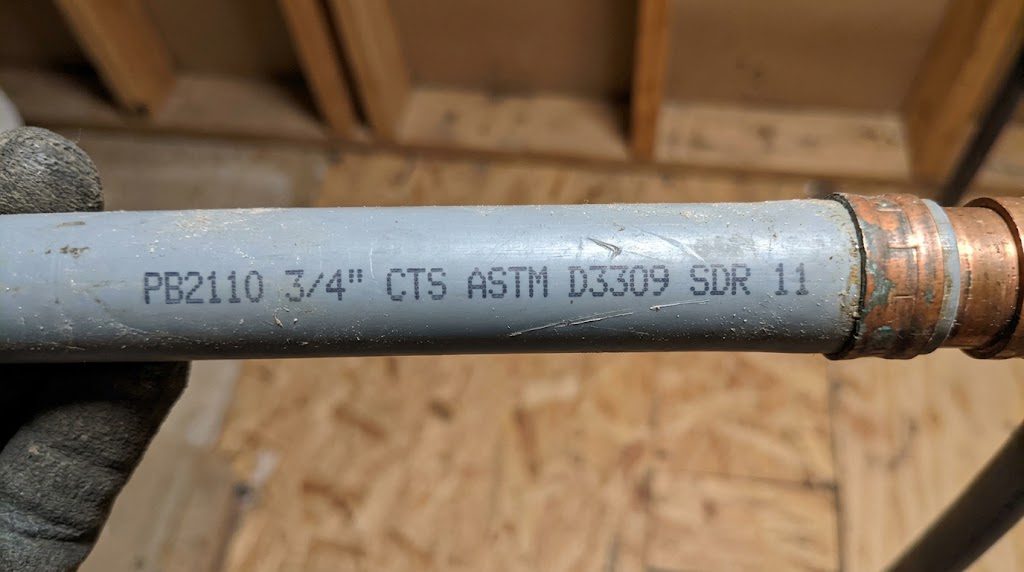
Definition
Polybutylene (PB) is a flexible plastic material used for residential water supply piping, including interior hot- and cold-water distribution lines and underground service lines.
Explanation
PB piping was installed in North American homes from the late 1970s through the mid-1990s. Interior tubing is commonly gray, while underground service piping may be blue, gray, or black. Markings such as PB2110 or ASTM D3309 help identify it; color alone isn’t conclusive.
Many installations use insert fittings secured with crimp rings. Some have plastic fittings, while others have metal fittings. Polybutylene differs from PEX, and their insert fittings and crimp rings aren’t generally interchangeable. These distinctions and the material’s failure history are documented in the Plastics Pipe Institute’s Technical Note TN-31, 2023 edition.
Why It Matters
PB systems have a documented history of premature fitting and tubing failures. Deterioration may not be visible on the pipe’s exterior, so an inspection can’t establish its internal condition or predict its remaining service life. Finding PB doesn’t prove that every pipe is damaged or that failure is imminent.
Its presence may also affect insurance eligibility and replacement planning. Buyers should confirm the proposed insurer’s requirements and obtain a plumbing contractor’s assessment of replacement scope and cost. See my blog post here: Polybutylene Pipe Facts: What Homebuyers and Homeowners Should Know for more information.
Example Usage
I observed gray flexible water supply piping marked PB2110 beneath the kitchen sink, identifying it as polybutylene. No active leakage was visible at that location during the inspection. The internal condition and extent of concealed PB piping weren’t determined.