
Definition
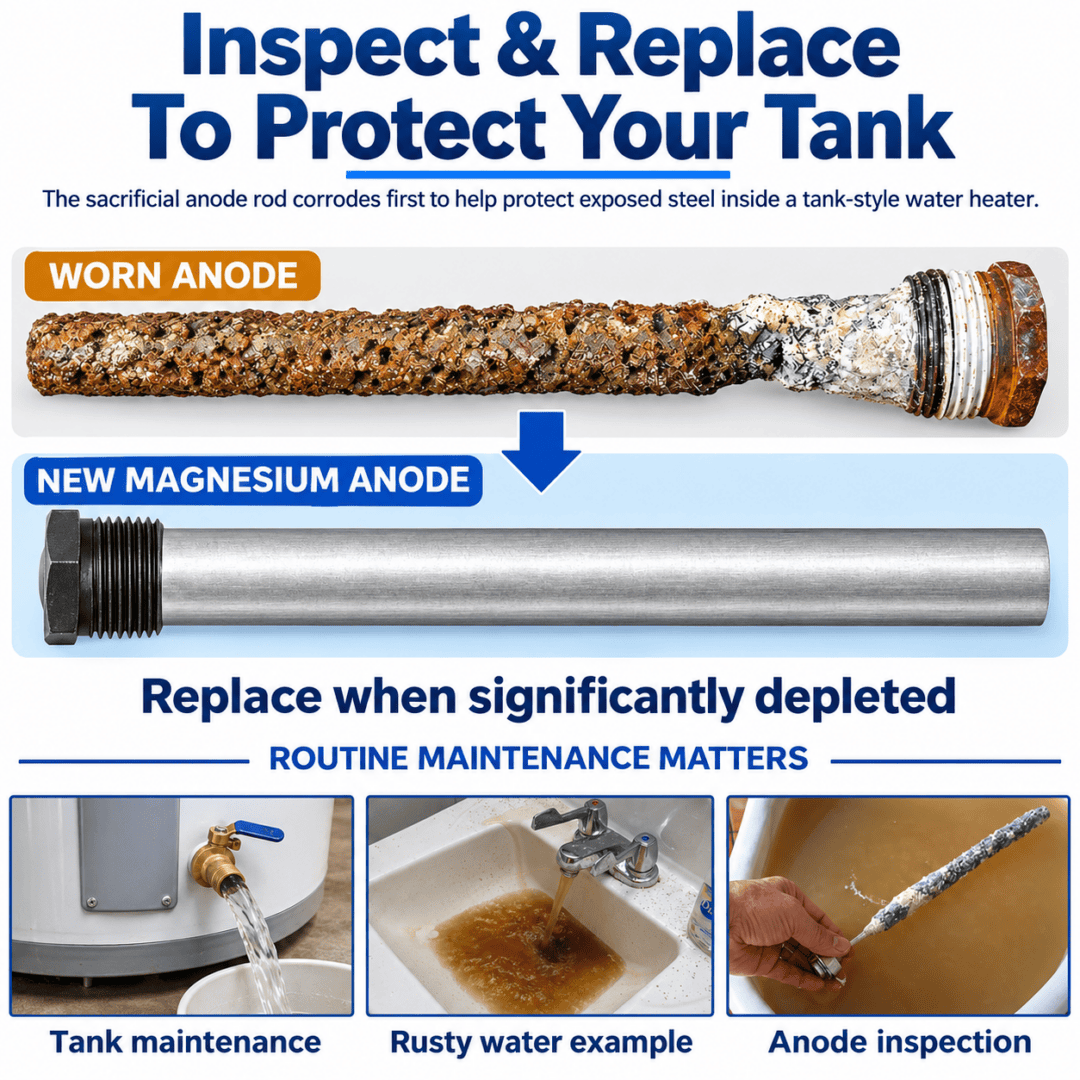
A sacrificial anode rod is a metal rod installed inside a tank-style water heater to help protect the steel tank from corrosion. The rod gradually corrodes instead of exposed areas of the tank’s steel, helping extend the water heater’s service life.
Explanation
Think of the anode rod as a bodyguard for the water heater tank. It takes the hit so the steel tank doesn’t have to.
Most sacrificial anode rods are made from magnesium or aluminum alloys, sometimes containing zinc. The rod is commonly installed through the top of the tank and extends down into the stored water.
Through a process called galvanic corrosion, the anode’s metal is consumed preferentially, protecting exposed steel surfaces inside the glass-lined tank.
As the rod deteriorates, its ability to protect the tank decreases. The rate of deterioration depends on water chemistry, the type of anode, and operating conditions.
Why It Matters
A sacrificial anode rod is an important part of a tank-style water heater’s corrosion protection.
Once the rod is substantially consumed, exposed steel inside the tank becomes more vulnerable to corrosion. Periodic inspection and replacement, when needed, can help extend the tank’s useful life.
Under certain water conditions, magnesium anodes can also contribute to the production of hydrogen sulfide, which produces a rotten-egg odor in hot water. That odor doesn’t necessarily mean the rod has failed.
For additional information, see Smelly Hot Water? 10 Reasons Your Water Heater May Need Attention.
Example Usage
“The tank-style water heater is equipped with a sacrificial anode rod intended to reduce internal tank corrosion. Determining the remaining condition of the rod requires removal and examination, which was not part of this home inspection.”