
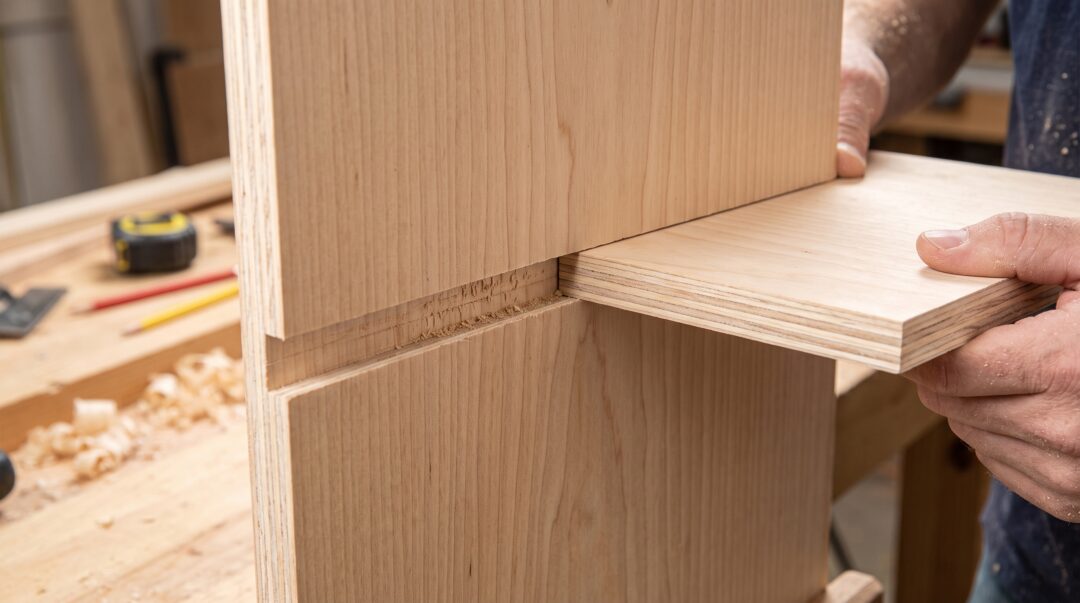
Definition
A dado is a flat-bottomed groove cut across the grain of a wood member. It is commonly sized to receive the edge of another board, panel, shelf, or partition.
Explanation
Dados are widely used in cabinetmaking, built-in shelving, furniture, and finish carpentry because they provide a positive location for adjoining pieces and increase the surface area available for glue or fastening.
A typical example is a horizontal groove cut into the side of a cabinet to receive a fixed shelf. The shelf fits into the groove rather than simply resting against the cabinet side.
A dado is generally cut across the grain of solid wood, while a similar channel running with the grain is called a groove. When the cut is made along the edge of a board rather than within its face, the joint is typically described as a rabbet.
A dado may extend completely across the board, called a through dado, or stop before reaching an exposed edge, called a stopped dado. A stopped dado can conceal the joint when viewed from the front.
You can cut dados with a table saw, router, radial-arm saw, or other woodworking equipment. Their width and depth vary according to the material being joined and the intended use.
Why It Matters
A properly fitted dado aligns adjoining parts, resists movement, and provides reliable support for shelves, partitions, and similar components. Poorly sized or damaged dados may allow shelves, partitions, or other components to fit loosely or lose some of their intended support.
Example Usage
The fixed cabinet shelves were installed in dados cut into the cabinet side panels, providing positive support along the ends of the shelves.