
Definition
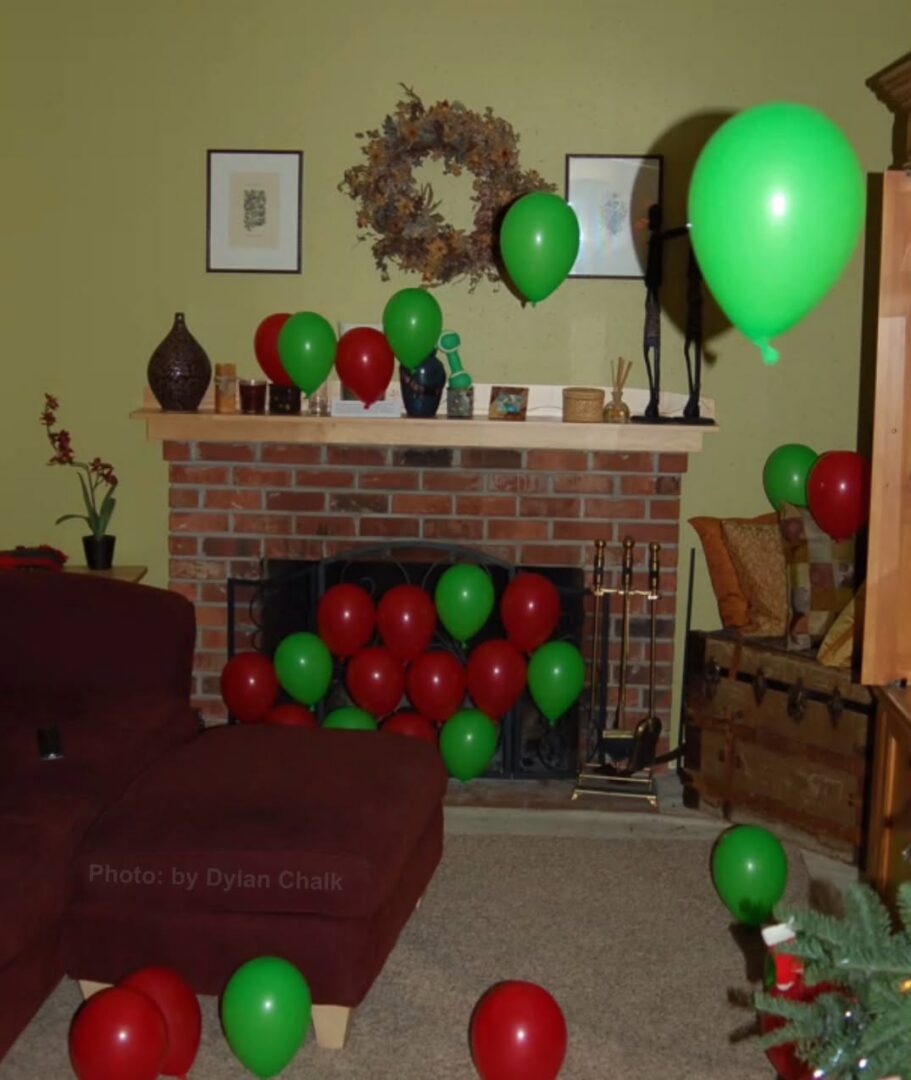
The chimney effect is airflow through homes and other buildings driven by a difference in air temperature and density. In a heated house during cold weather, it tends to draw outdoor air in through lower openings and push warmer indoor air out through upper openings. This process is also called the stack effect and is clearly seen in this picture where the balloons are collecting at the fire box opening, as air moves up the chimney. Tip: Keep the damper closed when the fireplace is not in use.
Explanation
Stairwells, open wall cavities, and utility chases can provide paths for air to move between levels. Gaps around attic hatches and ceiling penetrations can let that air escape into a vented attic. The effect generally increases with building height and with a greater difference between indoor and outdoor temperatures. In summer, when the house is cooler than outdoors, the tendency can reverse, with air entering higher openings and leaving through lower ones. Wind and exhaust fans can also influence the direction of airflow at a particular opening.
Why It Matters
The chimney effect can contribute to drafts near the lower levels of a house and increase heating or cooling costs. In winter, air escaping into a cold attic can carry indoor moisture with it. If that air reaches cold roof sheathing, moisture can condense on the surface. In hot weather, the reversed airflow can draw hot, humid attic air into the house through the same gaps.
Example Usage
“I observed gaps around the attic hatch. During cold weather, the chimney effect can carry warm indoor air through these gaps into the attic.”