
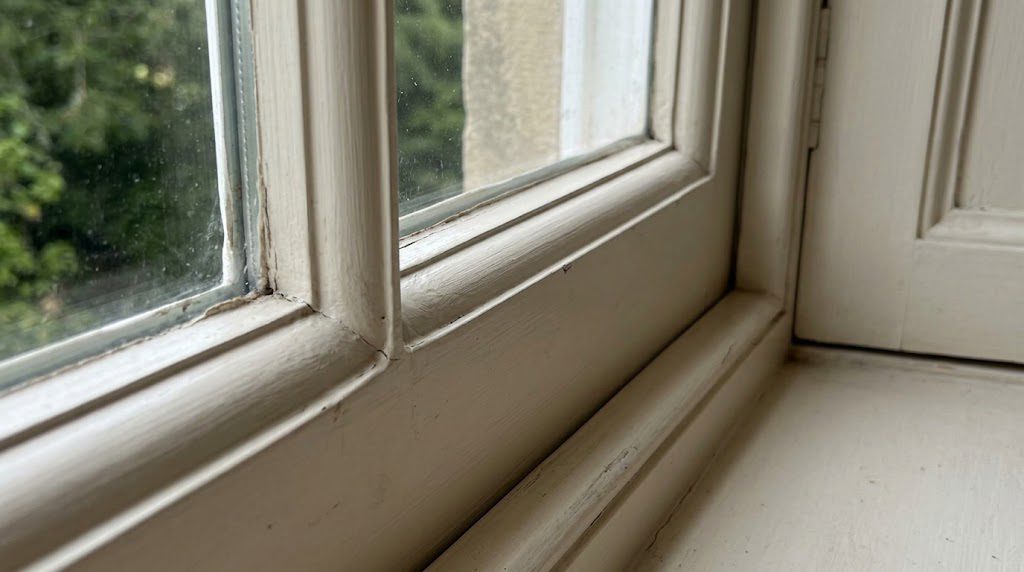
Definition
An ovolo is a convex architectural molding with a rounded profile, commonly resembling a quarter-circle or quarter-ellipse in cross-section. It is used to ornament and soften the edges of woodwork, stonework, and other architectural components.
Explanation
The term ovolo comes from classical architectural terminology and describes the shape of a molding rather than a particular building component. The profiles were widely used in Georgian-period architecture, including 18th-century doors, sash windows, paneling, and cabinetmaking. They commonly appear along the edges of timber frames, glazing bars, and raised panels. From the late 16th century onwards the ovolo molding appeared and was the universal shape for window frames, door frames and all sorts of molded details until the beginning of the 18th century.
In traditional joinery, an ovolo may be formed as part of the original timber rather than installed as a separate strip of molding. Its rounded surface provides a decorative transition between adjoining surfaces and can be combined with smaller beads, fillets, and recessed profiles.
Although an ovolo resembles a quarter-round molding, the terms aren’t always interchangeable. Ovolo identifies a particular convex molding form within architectural design, while quarter-round is a more general description of a rounded molding profile.
Why It Matters
Recognizing an ovolo can help homeowners, inspectors, and restoration professionals identify traditional architectural details and distinguish original or historically appropriate millwork from later replacements.
The profile is especially useful when examining historic windows and doors. Its shape can help identify the style of the joinery and guide the selection or reproduction of matching moldings during restoration. An ovolo is primarily a decorative architectural feature, not an indication of a defect or structural condition.
Example Usage
The interior window trim incorporated an ovolo molding profile consistent with traditional architectural millwork. I observed no visible damage to the molding at the time of inspection.