
Definition
A putlog hole is a small opening or recess in a masonry wall that receives the end of a horizontal timber or pole called a putlog. These timbers helped support temporary scaffolding while brick or stone walls were being constructed.
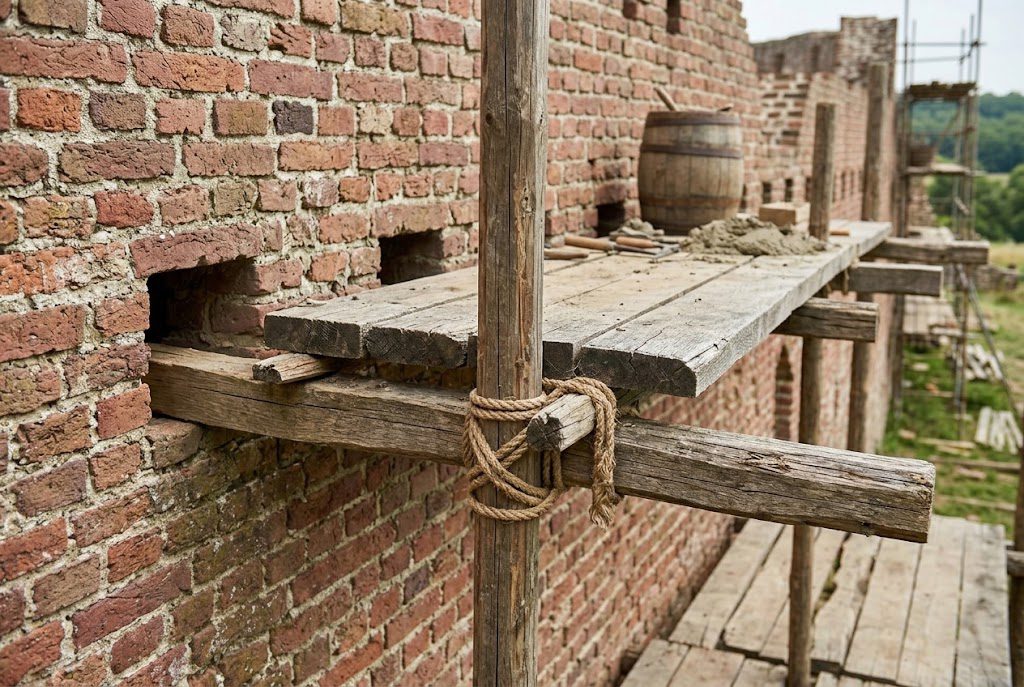
Explanation
Before modern scaffolding became common, masons often relied on the walls they were building to support their working platforms. Masons inserted one end of a horizontal timber, called a putlog, into an opening in the masonry. The opposite end rested on the scaffolding framework, supporting planks alongside the rising wall.
As construction progressed upward, masons formed additional openings in the wall at different elevations. After removing the scaffolding, builders sometimes filled the openings with masonry or mortar. Others remained open.
Today, putlog holes may appear as small square or rectangular openings, sometimes arranged in rows across historic brick or stone walls. They can also become visible when old plaster, stucco, or other wall coverings are removed.
Why It Matters
Putlog holes offer a glimpse into how masonry buildings were constructed before modern scaffolding became commonplace. Their location and arrangement can reveal where workers supported their scaffolding as the walls rose, preserving visible evidence of construction methods that might otherwise be forgotten.
Recognizing these openings also helps distinguish original construction features from missing bricks, deterioration, or later alterations. Some were filled when construction was completed, while others remain visible centuries later.
When putlog holes remain open in an exterior wall, their potential to admit moisture deserves consideration. However, their presence alone doesn’t establish a defect, and alterations to historic masonry should respect the building’s original construction and character.
Example Usage
I observed several small, regularly spaced openings in the older masonry wall. Their arrangement matches putlog holes, which were historically used to support temporary scaffolding during construction.